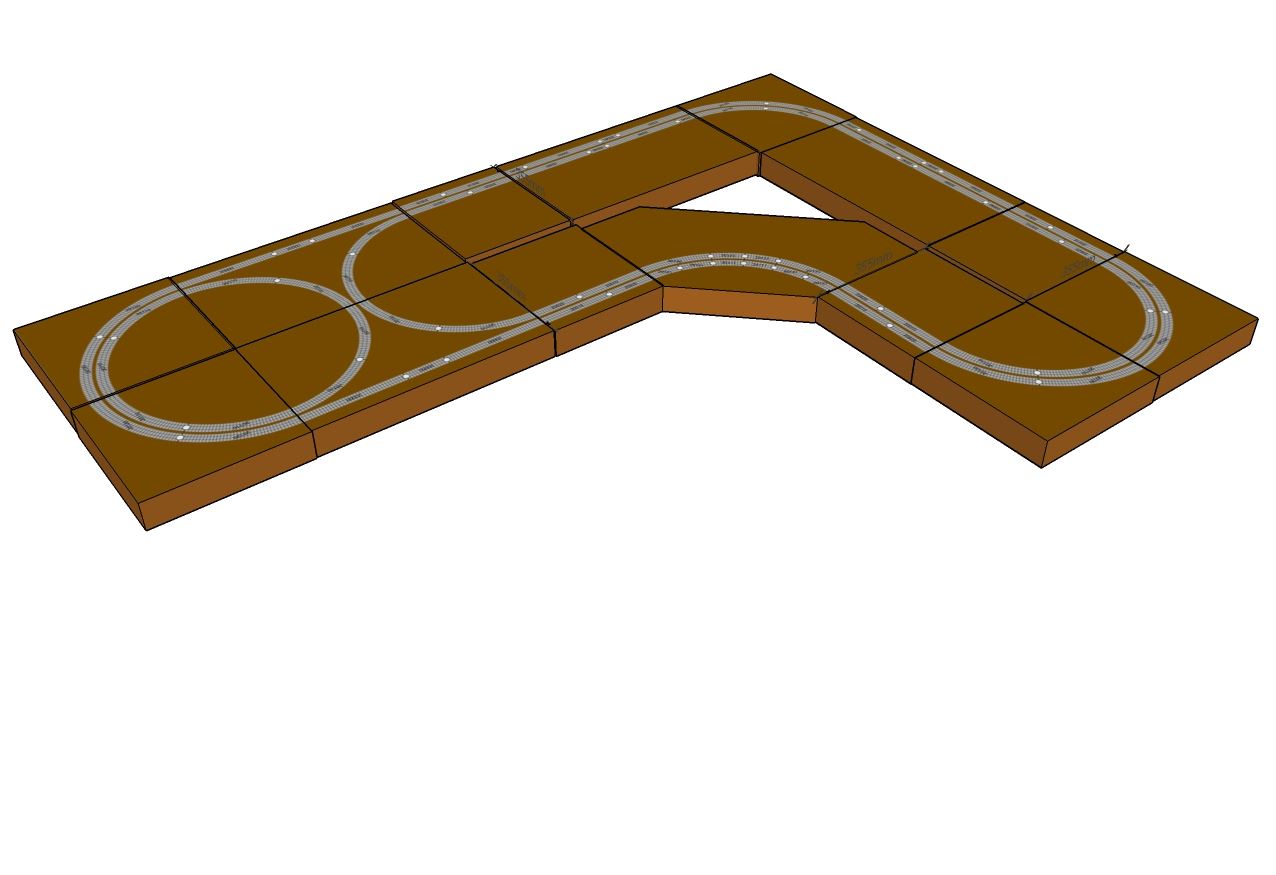

T-TRAK LayoutsAt it's very core, the T-TRAK standards are designed to set up a simple circle or oval shaped layout on a common "banquet" table. But you can take these simple standard modules, and create a layout much more interesting than the simple oval. |
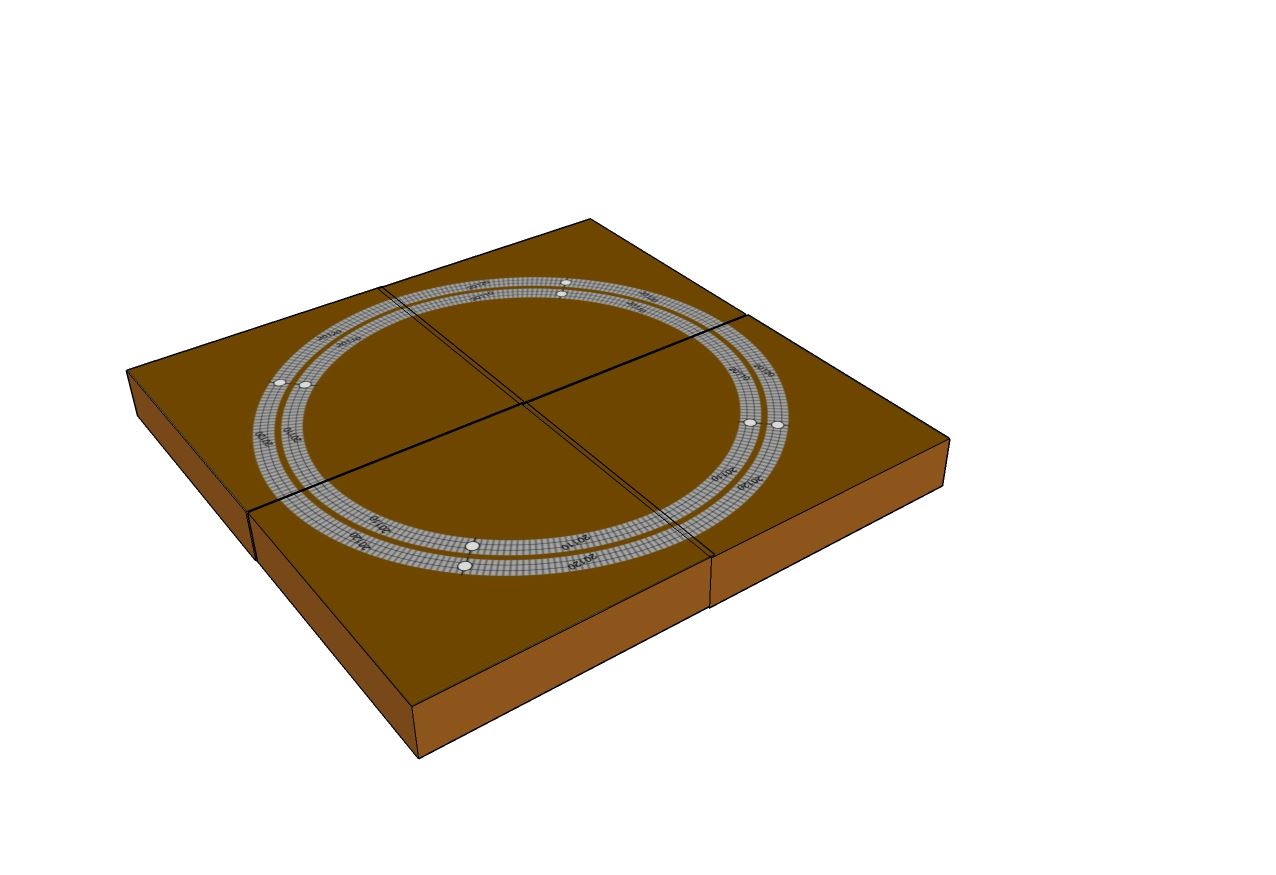
The simplest layout consists of a circle. This can be created with either four 90° corners (pictured), two 180° end caps, or an end cap and two 90° corners. It is assumed that at least one of the corner modules includes power drops for both tracks, using Unijoiner power connections as specified in the standards. |
|
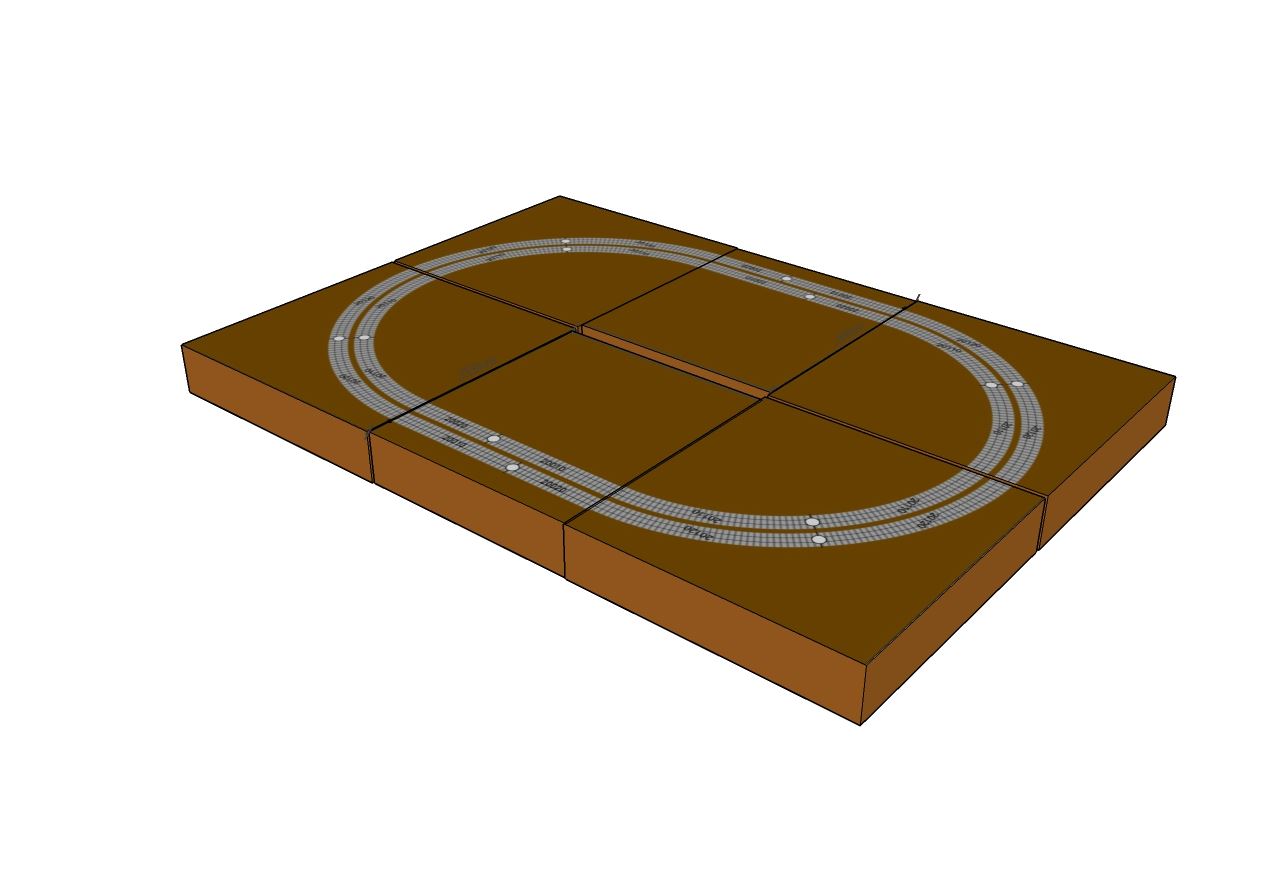
Adding a pair of singles to the previous circle layout yields a small oval slightly over 3 feet long. |
|
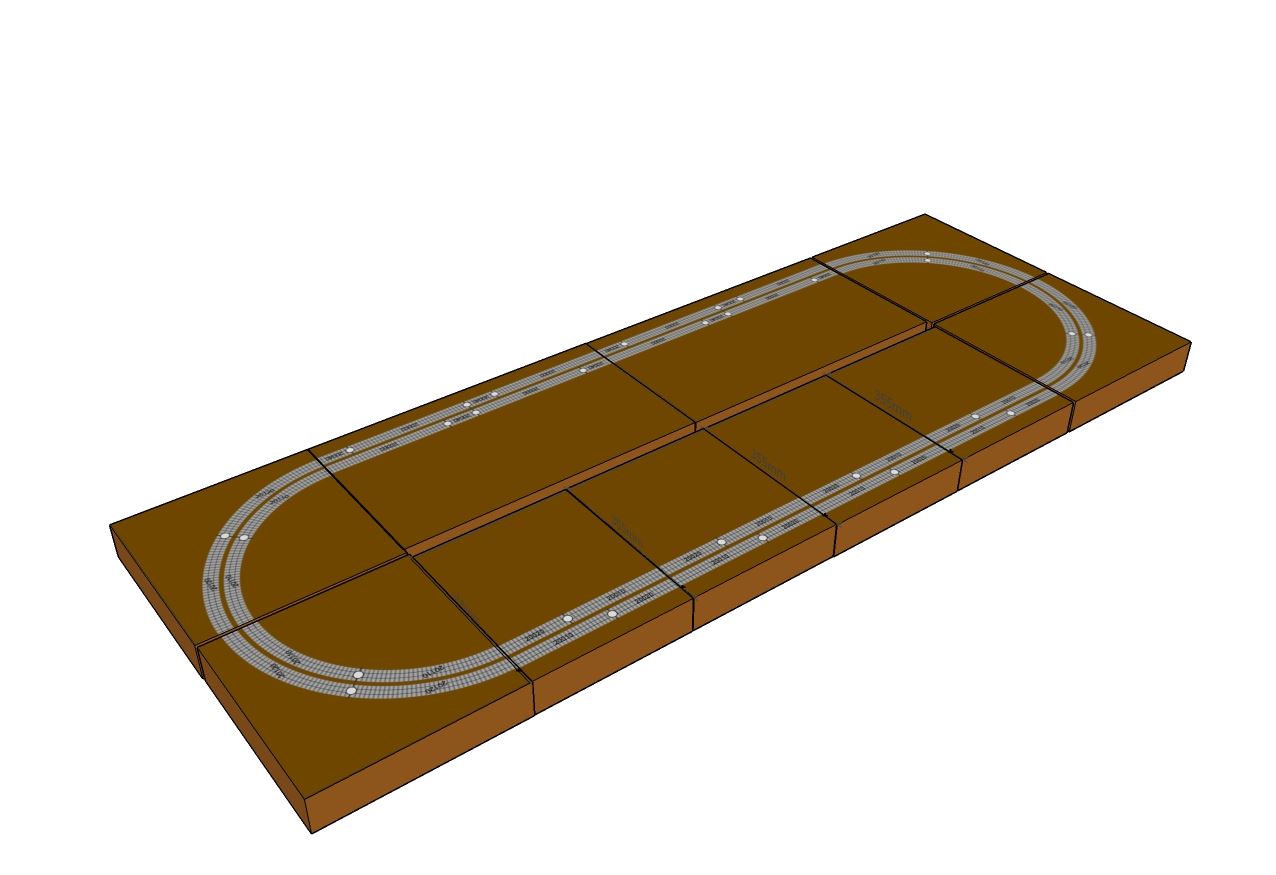
Adding a double to the previous small oval layout yields adds another foot to the size of the oval. Notice that one of the singles was moved to the near side. |
|

Naturally, the expansion of this layout can continue by adding a pair of singles modules to each side. In this picture, the layout has been expanded by adding a double and two singles. The double could easily have been two singles. The length of this layout is slightly over six feet. A good rule of thumb is to connect a power drop approximately every 6-8 "single" units of modules. So if one of the original corner modules included a power drop, the corner diagonally opposed should also have a connected power drop on this layout. |
|
Adding an additional 90° corner and an inside corner to the previous module inventory permits the assembly of an L-Shaped layout. |
|
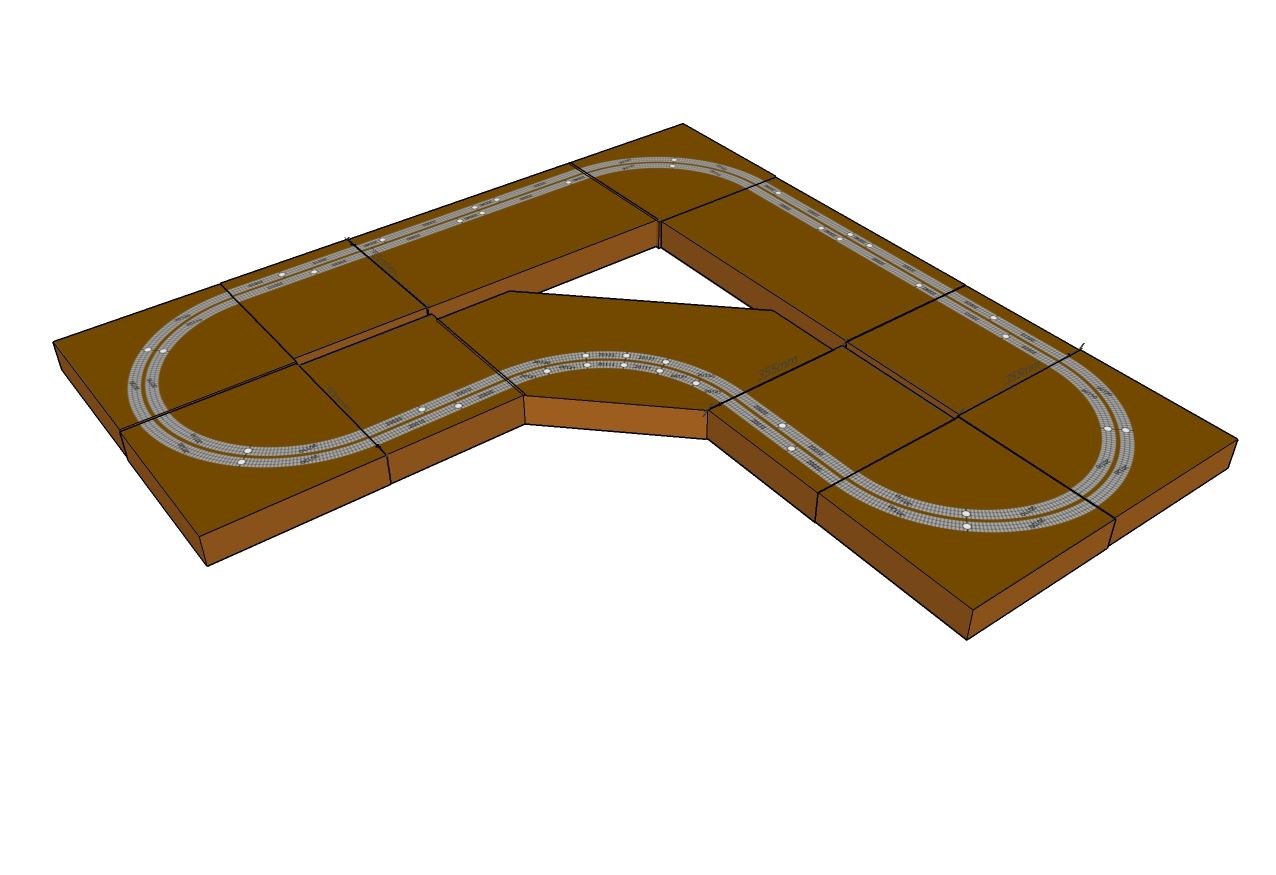
Another alternative is to add a pair of T-Junctions to the "6 foot layout" to create three ovals - two inner loops and one outer loop. | 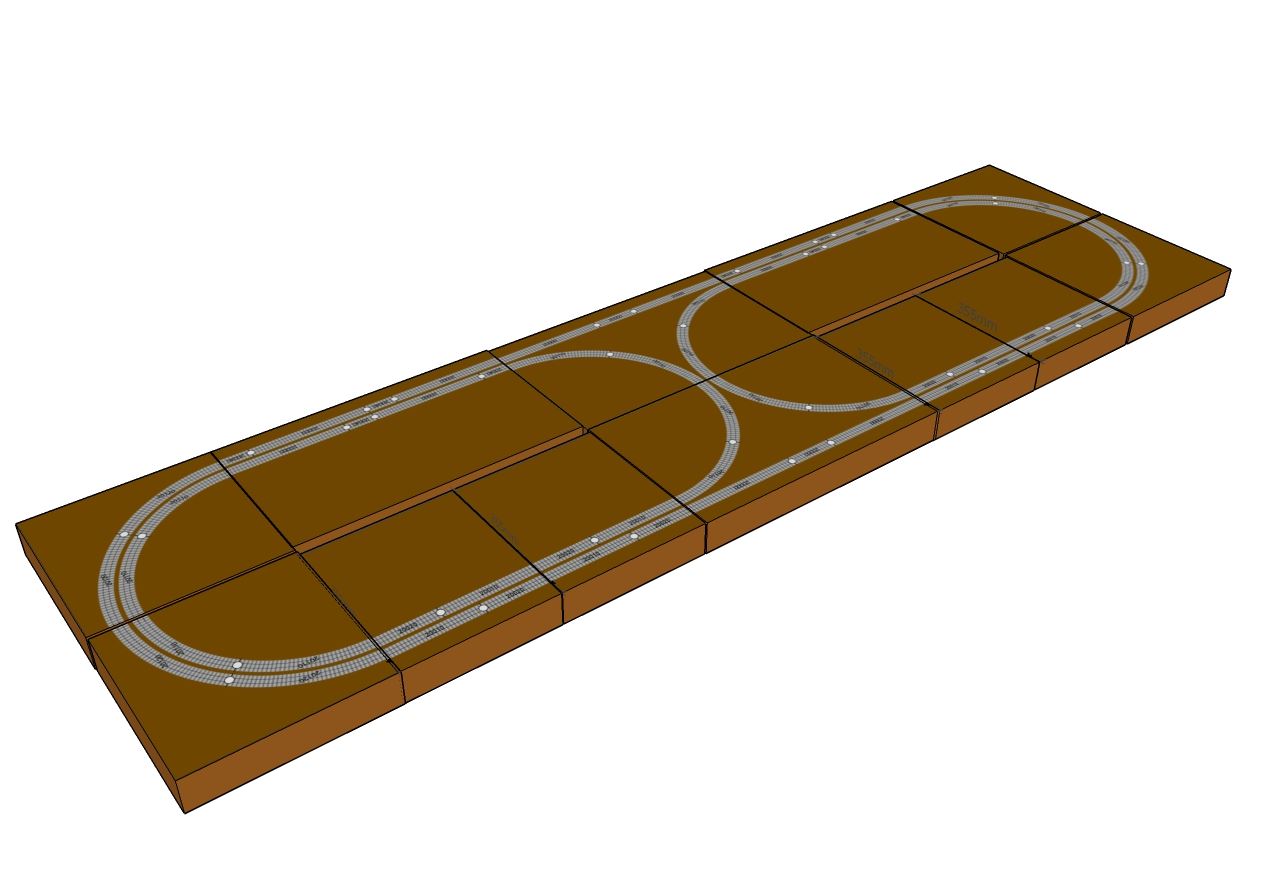 |
Finally, by adding all of the previous discussed modules together, an L-Shaped, Tri-Oval can be created. There are other configurations that can be created with this modest inventory of modules but those exercises will be left to the reader. |
|